Be Our Guest
The first night in Lebanon I mentioned to my host mother, Mira, that I needed to find a place the next day to buy some shampoo and toothpaste. “Ok, no problem.” She said.
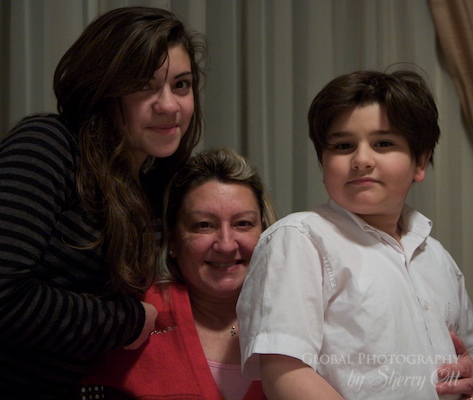 The next morning I woke up, opened my door and went down the hallway to the kitchen to find Mira. She wasn’t in the kitchen; instead she was at the front door where a man was delivering groceries to her. After greeting her with “good morning,” she handed me a bottle of shampoo, conditioner, and toothpaste, saying “these are for you.”
I was a little stunned, as I hadn’t asked her to buy me these products – I just mentioned that I needed to buy them. But she wouldn’t take any money and insisted I take them. This was my first experience of what it was like to be a guest in Lebanon.
Guest culture is a very important piece of Lebanese culture and it took some getting used to as an American. Over the next month I learned that this also took on a traditional form of ‘volunteering’. Lebanese regularly help their relatives, friends, and neighbors without expectation of direct compensation, financial or otherwise. This provides them with a mutual aid network in which they do not necessarily reciprocate help to the person who helped them. Rather, the expectation is to reciprocate by helping others within their network.
Whether you call it traditional volunteering or hospitality, I was a constant recipient of it while in Lebanon – paying for very little. Around the house, little things that I needed were always provided for me. Once I saw an orange juice commercial on the television and commented that it looked good. The next day oranges were delivered for freshly squeezed orange juice. In fact – I had freshly squeezed orange juice every day until I left after I had mumbled my affection for the juice.
I quickly learned to be careful about what came out of my mouth. Especially after I complained about my wrinkles and Mira started to make me a Botox appointment.
But it didn’t stop at my host family’s home – it extended to everyone I met. One night I went out with Walid and a group of his friends where we ate and drank for hours. When the bill came at the end of the night, all the men picked up the tab and wouldn’t accept payment from me or any of the other women. That same night I met a friend of Walid’s, Safwan, who lives in Tripoli. After mentioning that I’d like to see the souks in Tripoli, he had invited to personally show me around.
In the US I would have smiled graciously and said OK, knowing that there was a 50-50 chance of it really happening. But I knew in Lebanon the invitation was real and I was expected to take him up on it. So the next week I hopped on a bus to Tripoli where Safwan and his driver were waiting to give me a tour of the city.
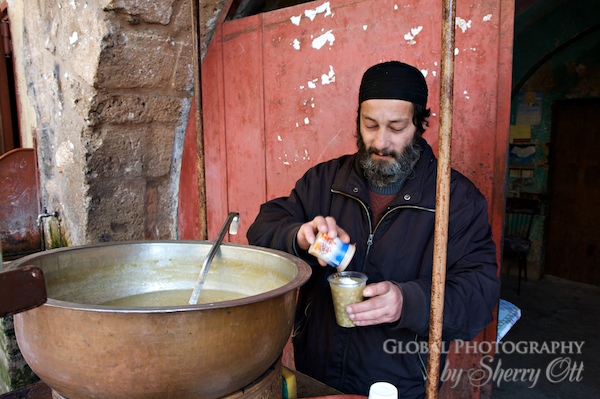
After a time, Safwan had to go to work, but he left me in the care of his driver to continue showing me around the old souks and Citadel. He even took me to lunch, and to no surprise, would not let me pay. Even as we walked through the souks he would proceed to buy me things like a dessert or coffee. One thing that did surprise me, however, happened while we were walking through the shoe souks. I mentioned that I needed to purchase some shoe polish for my boots, and as soon as the words left my mouth and hung in the air like a cartoon text balloon, he walked into the shop and purchased shoe polish for me.
Finally, at the end of the day, Safwan bought my bus ticket back to Beirut and made sure I got on the right bus – bidding farewell to me, his guest.
The guest culture also showed up from people I didn’t even know. Mira’s neighbors would bring me traditional food dishes such as tabouleh, hummus or fattoush because they knew Mira didn’t do a lot of cooking, ensuring that I was able to taste everything Lebanon had to offer.
You may read this and think that Lebanon would be a great country to be a guest. However, all of this constant attention wasn’t easy for me to accept at times. As much as I love having a ‘mother’ and being basked in attention, at age 41, I wasn’t used to this much attention.
The Lebanese guest culture actually conflicts with my American culture in a way, and that’s what caused me grief. Americans certainly welcome guests, however we also have a desire to be fair and equal. Since I was the constant recipient of things and experiences in Lebanon, it was only natural that I wanted my chance to pay them back in some way; yet they wouldn’t let me, leaving me to feel a bit helpless. And I knew that I couldn’t simply wait until they came to visit me to repay the favor as the odds of any of my Lebanese friends visiting me are about .0001%.

Only once was I allowed to ‘pick up’ a bill for someone. Yola lived in Canada for a few years and from that experience she knew that it was important to me to be allowed to pay once in a while. But she only let it happen once and the rest of the month she was buying me lunch, or making it and bringing it from home.
So I just had to accept that I was a part of this guest culture and mutual aid network, which was woven deeply into the Lebanese culture.
However, the question is – when is someone around long enough that you are no longer a guest? I never did find out the answer. All I know is a month wasn’t long enough to lose my ‘guest’ status.
Sherry was in Lebanon as part of Geovisions Conversation Partner Program. You can read more about her experiences in the Middle East through her Volunteer Chronicles.






Leah on Mon, 6th Jun 2011 8:12 am
I really enjoyed reading your post. I am thirty-two soon and have itchy feet that are ready to try out foreign soils.
It is a fear of leaving the security of the day to day grind of paying the bills and living a safe and non-challenging way of life that has put me on hold for some time.
I hope (as it has I) your post will inspire others to go and follow their bliss – Leah 🙂
Patricia GW on Mon, 6th Jun 2011 8:54 am
Travel and experiencing a new culture really has put it into perspective, and filled that void with purpose (and joy).
In three weeks I’ll be moving to Paris myself for one month. I have the same feeling – the incredible surreal realization that I’m going to be living there…. it’s thrilling!!
Abby on Mon, 6th Jun 2011 2:11 pm
Oh, Jenny! Escargot isn’t palatable — it’s delicious! I love your writing style; it’s so fun and energetic. Can you believe how far we’ve come? Everyone, Jenny and I were in the exact same industry and have known each other online and via work emails for years and years. But we’ve only met once, many, many years ago. And one of those jobs she was sleeping next to her BlackBerry for was one I’d just left. And now she’s 33 and living abroad, just like I was last year. Kindred spirits. Jenny, you’re a true inspiration — I can’t wait to see how your adventure unfolds!
Debbie Beardsley on Mon, 6th Jun 2011 3:22 pm
Your life in Paris sounds ideal. It is nice to read about people who follow their dreams instead of wishing they had! Enjoy the rest of your journey.
Terriaw on Tue, 7th Jun 2011 1:40 pm
Wow, fabulous and well said! I love your new outlook on like. After experiencing career burnout and feeling a little lost and purposeless lately, you have encouraged me. I look forward to seeing Paris someday!
Jenny on Tue, 7th Jun 2011 6:50 pm
merci for all the sweet comments! @abby we are soooo kindred spirits! well except when it comes to our differing feelings on escargot…;) and congrats patricia on the move! thrilling indeed!
shawna on Thu, 9th Jun 2011 1:32 am
you’ve reawakened my travel bug. must. return. to. france. (someday.) eat a croissant for me!
Weekly Travel Blog Links — LandingStanding on Mon, 13th Jun 2011 6:16 am
[…] how badly I want to go to Paris… If only we could afford living there for an extended period of time during our travels! Any […]
G. Michael Schneider on Sun, 19th Jun 2011 3:36 pm
I am a firm believer in living and working overseas, just as you described. However, many of us actually like our jobs and our homes and are simply looking to renew and refresh our lives, not change it. However, you can have the same type of cultural experience without having to reach into your own wallet and without having to quit your day job–by taking what I call a “working vacation.” My wife and I have done this 15 separate times, from Australia to Zimbabwe, Turket to Tibet, Mauritius to Mongolia. I describe how to do it in my blog otherguysdime.wordpress.com and via Twitter at @otherguysdime. Learn how to have fun without having to have burn any of your bridges behind you.